Quality Inspection & Testing for Structural Steel Fabrication
Quality inspection and testing are essential to reliable structural steel fabrication. For industrial buildings, warehouses, commercial facilities, and pre-engineered buildings (PEB), steel components must meet the applicable project specifications for dimensions, materials, welding, and surface protection.
At ZSJH STEEL, quality inspection is an important part of the steel fabrication process. By checking components against approved drawings and agreed technical requirements, we help customers identify potential issues before shipment and prepare fabricated steel products for their next stage of construction or assembly.
1. Material Inspection and Verification
Material quality is the foundation of structural steel fabrication. Before and during production, material requirements should be checked against the project specifications and purchasing documents.
Depending on the project, material verification may include:
Checking steel grades, dimensions, and material identification.
Reviewing material test certificates and traceability records when required.
Verifying plate thickness and section sizes.
Confirming that supplied materials meet the agreed technical specifications.
Proper material verification helps reduce the risk of using incorrect steel grades or dimensions in fabricated components.
2. Dimensional Inspection of Steel Components
Dimensional accuracy is important for the assembly and installation of steel structures. Incorrect member lengths, hole positions, plate thicknesses, or connection dimensions can create difficulties during installation.
Dimensional inspection may cover:
Overall length, width, and height of fabricated components.
Plate thickness and steel section dimensions.
Hole diameters, spacing, and positions.
Connection plate and base plate dimensions.
Straightness, alignment, and other specified tolerances.
Inspection results should be evaluated against approved fabrication drawings and applicable project tolerances. This helps ensure that components are manufactured to the required dimensions before they leave the factory.
3. Welding Inspection and Testing
Welding quality is a key consideration in fabricated steel structures. Welds must be produced and inspected according to the applicable drawings, welding procedures, project specifications, and acceptance criteria.
Depending on the component and project requirements, welding quality control may include:
Visual Weld Inspection: Checking visible weld appearance, profile, continuity, and surface defects.
Weld Size Verification: Confirming specified weld dimensions where applicable.
Non-Destructive Testing (NDT): Using methods such as ultrasonic testing (UT), magnetic particle testing (MT), liquid penetrant testing (PT), or radiographic testing (RT) when required by the project.
The appropriate inspection method depends on the weld type, material, component design, applicable standards, and contractual requirements. Additional testing should be arranged according to the agreed inspection plan rather than assumed to be necessary for every component.
4. Surface Preparation and Coating Inspection
Surface treatment helps protect steel components and achieve the required finish. Depending on the project, steel members may receive shot blasting, primer, paint systems, or hot-dip galvanizing.
Surface inspection may include:
Checking visible surface cleanliness before coating.
Verifying the specified coating system and color.
Measuring dry film thickness when required.
Inspecting for visible coating defects, missed areas, or damage.
Checking protective measures before packaging and shipment.
For galvanized components, inspection requirements may include coating appearance and thickness verification according to the applicable specification. The inspection criteria should be established in the project documents.
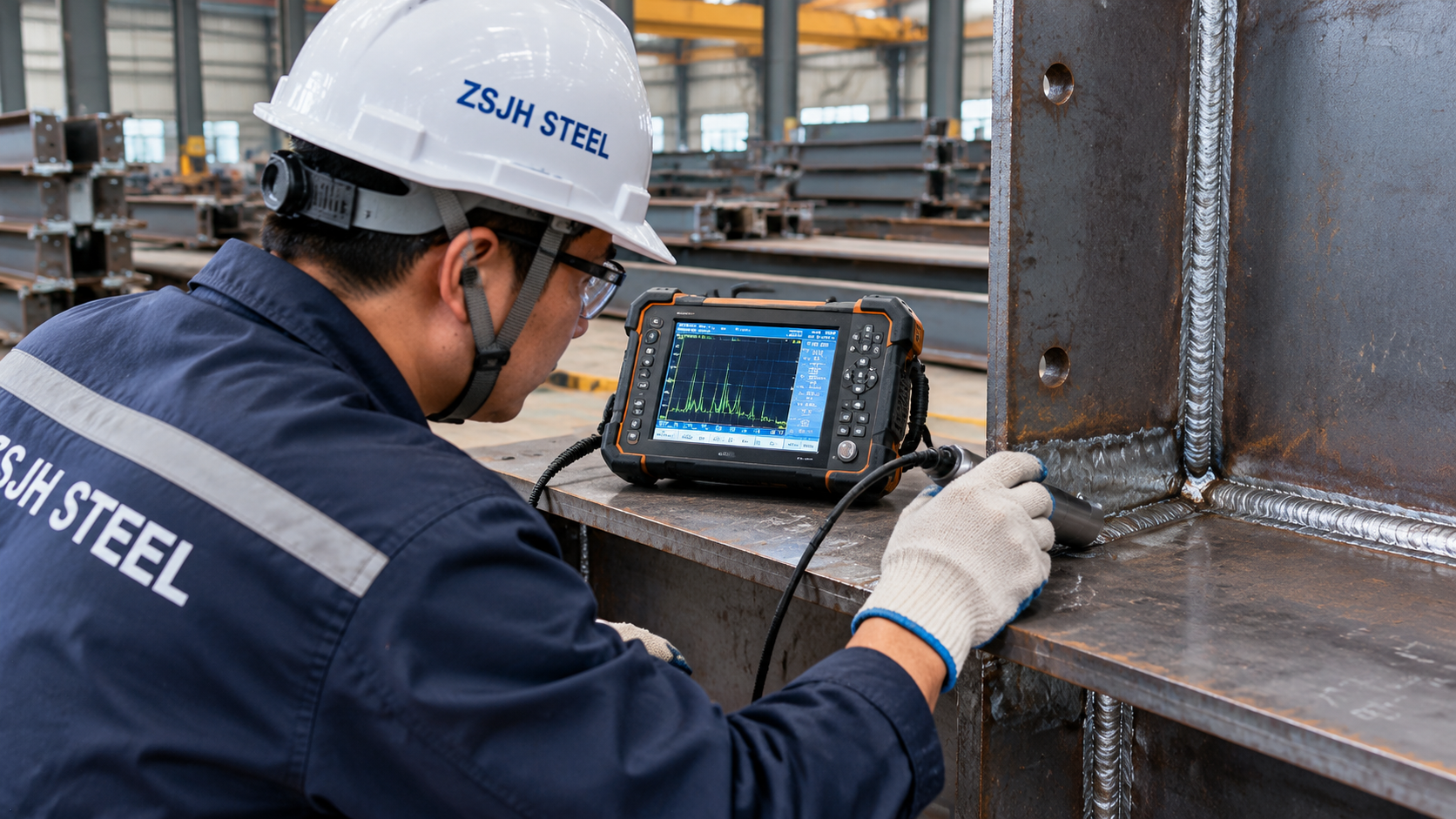
5. Inspection Records and Quality Documentation
Clear documentation helps customers understand how the supplied steel components were checked. The required records depend on the contract, project specifications, and inspection plan.
Where applicable, quality documentation may include:
Material test certificates.
Dimensional inspection reports.
Welding inspection records.
Non-destructive testing reports.
Coating inspection records.
Final inspection checklists and packing lists.
These records support quality traceability and help project teams review the supplied products against their requirements.
6. Final Inspection Before Delivery
Before shipment, fabricated steel components should be checked against the agreed order and project requirements. Final inspection may include quantity verification, component identification, visible surface condition, packaging, and consistency with the packing list.
For export projects, components can be marked according to part numbers, drawings, or assembly sequences where specified. Appropriate packaging and cargo securing measures help reduce the risk of damage during handling and international transportation.
A well-organized final inspection process supports smoother cargo receiving and helps customers prepare for installation.
7. Quality Control for OEM and Custom Steel Fabrication
OEM and custom steel manufacturing often involves components produced to customer-specific drawings, dimensions, and technical specifications. Quality requirements may therefore differ from one project to another.
Before production begins, customers and manufacturers should clarify material grades, dimensional tolerances, welding requirements, surface treatment, inspection methods, and the documentation to be supplied.
At ZSJH STEEL, we work with customers to understand these requirements and coordinate inspection activities according to the agreed project scope. This approach supports clear communication between engineering, fabrication, quality control, and shipment preparation.
Discuss Your Steel Fabrication Requirements
Whether you need steel beams, columns, welded assemblies, connection plates, warehouse framing, or customized OEM steel components, clearly defined quality requirements help ensure that the manufacturing process meets your project expectations.
Share your drawings, technical specifications, applicable standards, and inspection requirements with our team to discuss a suitable fabrication and quality inspection plan.
Looking for a steel fabrication partner for your next project?
Contact ZSJH STEEL to discuss your requirements.

 English
 العربية
 Français
 Русский
 Español
 Português
 Deutsch
 italiano
 日本語
 한국어
 Nederlands
 Tiếng Việt
 ไทย
 Polski
 Türkçe
 አማርኛ
 ພາສາລາວ
 ភាសាខ្មែរ
 Bahasa Melayu
 ဗမာစာ
 தமிழ்
 Filipino
 Bahasa Indonesia
 magyar
 Română
 Čeština
 қазақ
 हिन्दी
 فارسی
 Kiswahili
 اردو
 Gaeilge
 Māori
 Hausa
 Igbo
 Kurdî
 Lëtzebuergesch
 ਪੰਜਾਬੀ
 Runasimi
 Yorùbá
 isiZulu


