:sales@zsjhsteel.com WhatsApp:+86-15122582058





ZSJH


I Beam Steel is a cost-effective structural member used to support floors, roofs, platforms, machinery and building frames. Its upper and lower flanges provide resistance against bending, while the vertical web transfers shear forces between the flanges.
This profile enables the beam to carry substantial loads without requiring a solid rectangular section of the same weight. It is therefore widely selected for projects where strength, structural efficiency and economical steel consumption are important.
ZSJH Steel supplies I beams as standard mill sections or project-ready components. Customers can order untreated beams for further processing or prefabricated members prepared for direct installation.
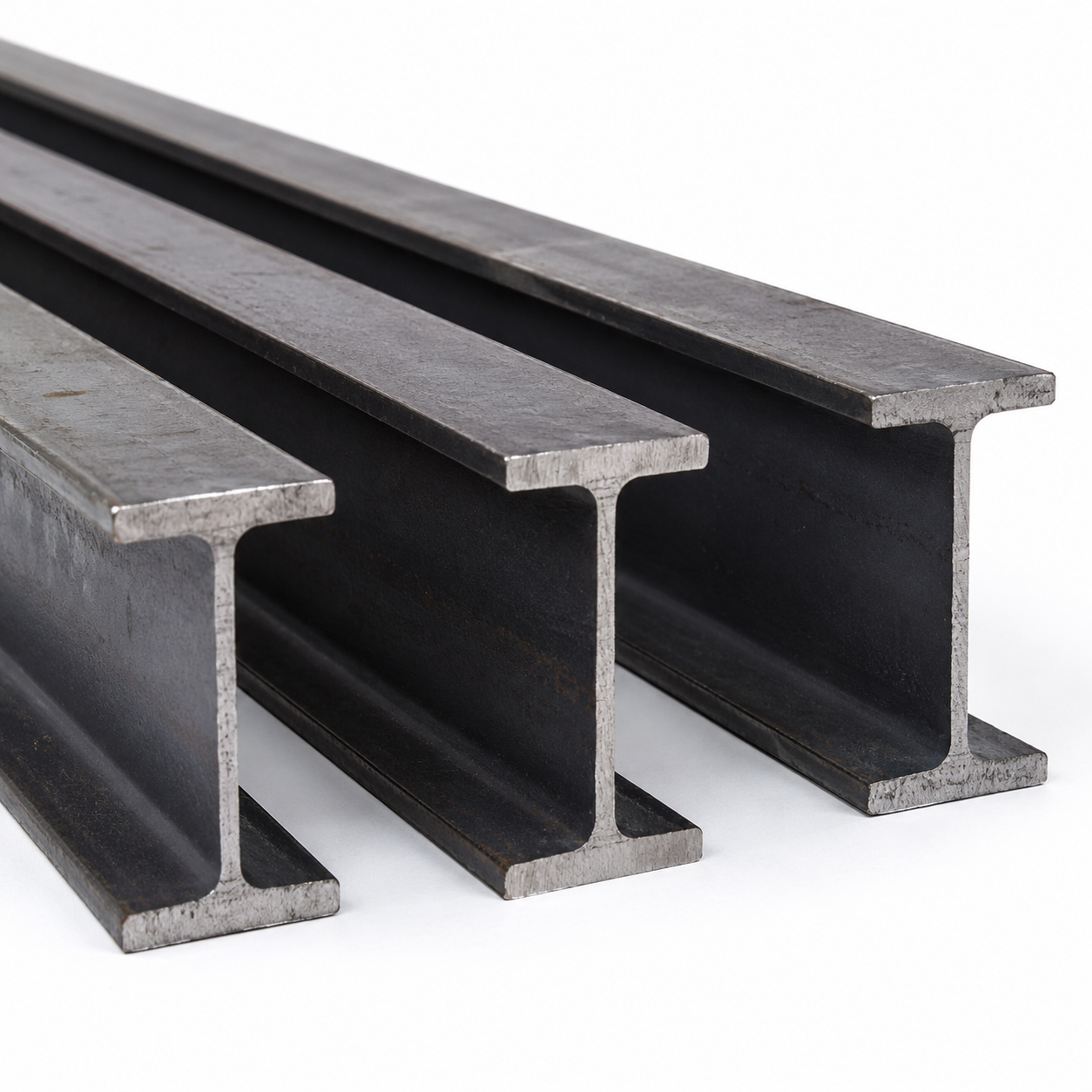
The flange-and-web configuration provides reliable performance when the beam is subjected to vertical loads and bending forces.
The efficient distribution of material helps reduce unnecessary weight while maintaining the required structural capacity.
Standard sections, mixed specifications and customized lengths can be supplied for small orders or large construction projects.
Cutting, drilling, welded plates and surface protection can be completed before shipment to simplify on-site construction.
I beams can be used as primary beams, secondary beams, floor supports, equipment bases and general load-bearing members.
| Product Item | Description |
|---|---|
| Product | Heavy-Duty I Beam Steel |
| Base Material | Structural carbon steel or high-strength steel |
| Common Grades | Q235B, Q355B, S235JR, S275JR and S355JR |
| Section Type | Standard rolled I section or custom fabricated section |
| Beam Length | Standard and project-specific lengths available |
| Cutting | Straight cutting, mitre cutting and drawing-based cutting |
| Hole Processing | CNC drilling or punching |
| Welding Service | Connection plates, stiffeners, brackets and attachments |
| Surface Finish | Mill finish, blasted, primed, painted or galvanized |
| Identification | Tags or component marks according to packing lists |
| Quality Documents | Material certificates and inspection records |
| Shipment | Containerized or break-bulk delivery |
We can provide:
Fixed-length cutting
Angled and mitred ends
CNC hole drilling
Bolt-hole punching
End plate installation
Stiffener plate welding
Base plate fabrication
Connection bracket welding
Beam splice preparation
Component marking
Shot blasting
Primer application
Finish painting
Hot-dip galvanizing
The appropriate section cannot be selected by appearance or building size alone. The following factors should be reviewed by the project engineer:
Consider permanent loads, operating loads, equipment loads and other forces acting on the structure.
Longer spans generally require sections with greater depth or structural capacity.
The distance between adjacent beams affects the load carried by each member.
Bolted, welded and seated connections require different hole patterns, plates and end preparation.
Humidity, chemicals, outdoor exposure and coastal conditions influence the required corrosion protection.
Long or oversized beams may require open-top containers, flat racks or break-bulk shipment.
Final beam selection should be verified by a qualified structural engineer.
| Operating Environment | Suggested Finish |
| Indoor, dry environment | Mill finish or shop primer |
| General industrial building | Shot blasting and primer |
| Visible structural steel | Primer and finish paint |
| Outdoor exposure | Multi-layer protective paint |
| Humid environment | Galvanizing or project-specified coating |
| Corrosive environment | Engineered heavy-duty coating system |
Yes. We supply standard mill sections as well as customized beams with cutting, drilling, welded plates and protective coatings.
Yes. Mixed sizes can be supplied according to your project material list. Each specification can be identified separately for installation.
Yes. Component marks can be added according to approved drawings and packing lists to assist with site identification.
Normally, cutting, drilling and welding should be completed before galvanizing. This helps maintain continuous zinc protection on the finished component.
Standard beams can be supplied according to a material list. Customized drilling or welded components require sufficiently detailed and approved drawings.


