Structural Arrangement
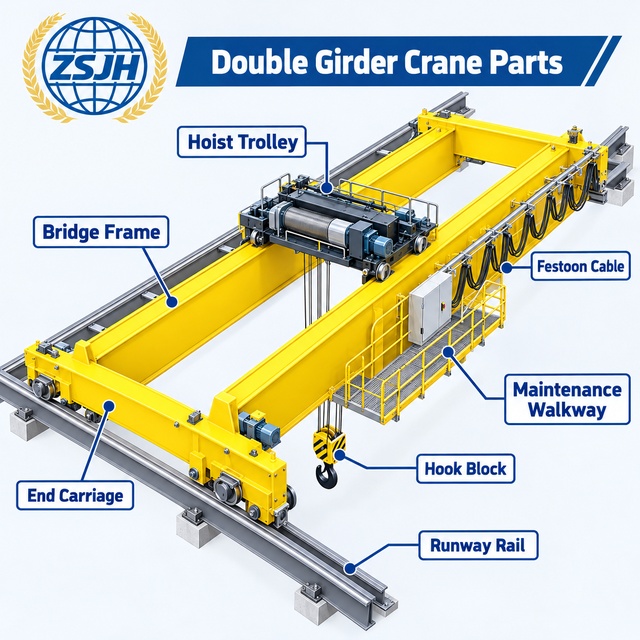
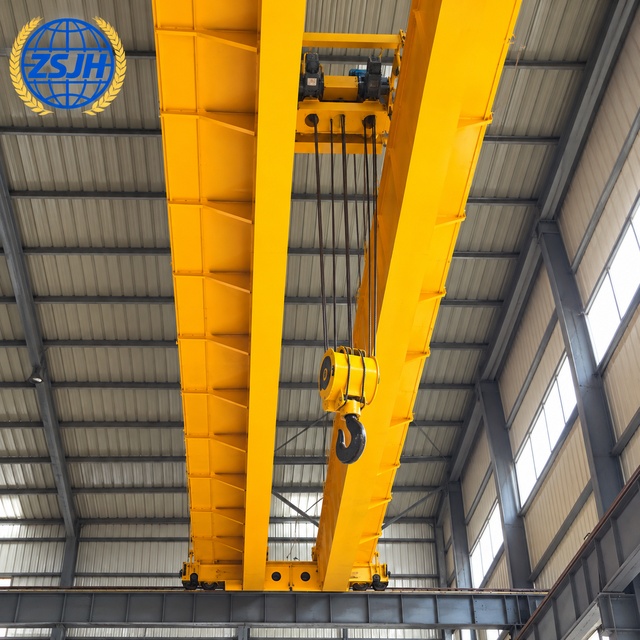
The bridge runs on top of the elevated runways, with a lifting trolley traversing the bridge. Common arrangements allow the hook to rise between the girders. Main/auxiliary hoists, platforms and cabs depend on the selected equipment and task.
Configuration Guide
Item | Enquiry and selection guidance |
Capacity | Example requirements: 5, 10, 16, 20, 32, 50, 63, 80 and 100t; confirm each combination |
Main/auxiliary hoists | For a designation such as 20/5t, define each rating and permitted combined operation |
Span and coverage | Specify rail gauge, travel, approaches, maintenance space and interference zones |
Lift | Define upper/lower hook positions and rigging space, not rail elevation alone |
Crane duty | Discuss A4–A6 for suitable tasks; A7/A8 requires service-specific verification |
Drives | Electric lift and travel; speed, inverter, creep and synchronization features by system |
Controls | Pendant, radio or an engineered cab; capacity alone does not determine the choice |
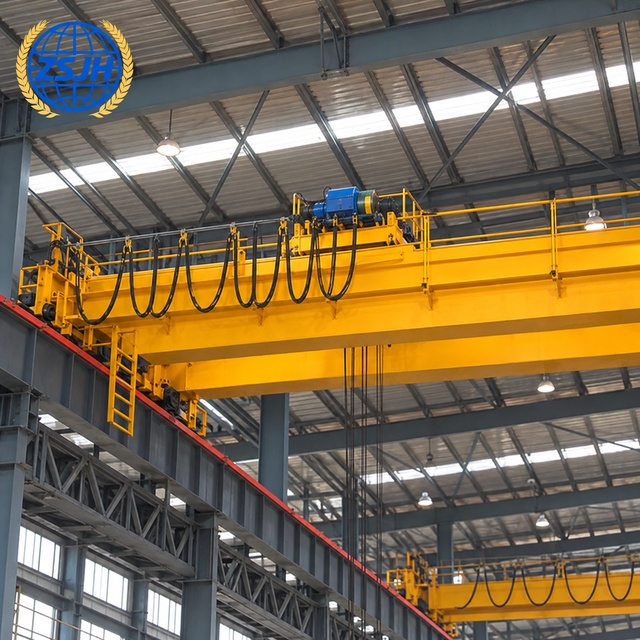
Access and protection | Agree walkways, guardrails, access, limits, emergency stop, brakes and collision protection |
Power and environment | Voltage, frequency, feed, heat, humidity, dust and corrosion |
Structural interfaces | Wheel arrangement, maximum/minimum wheel loads, horizontal actions and load cases |
Describe the Duty Before Selecting the Class
Broad group | Information to establish |
A1–A3 | Standby/lower-intensity patterns and actual load distribution |
A4–A5 | General cycles, load proportions and intended design life |
A6–A7 | Intensive cycles, heavier loading and fatigue requirements |
A8 | Very intensive service with a specifically verified equipment design |
These are discussion groups, not assignments by industry or shift count. Confirm crane and mechanism ratings separately, including the applicable GB, ISO, FEM or CMAA standard and edition. Do not use an unverified one-to-one conversion.
Suitable Applications
Consider this type for heavy steel fabrication, equipment manufacturing, thick-plate processing and large assembly bays. Tandem lifting, turning or coordinated cranes require a specific arrangement; capacities are not simply added together.
Double girder construction does not automatically establish A6/A7 duty or a greater usable lifting height in every building. Check roof clearance, rail elevation, trolley envelope and rigging together.
Operation and Positioning
Compare radio and cab control against visibility, operator location and access. Discuss fine positioning, inverter control or sway control for assembly work. Main/auxiliary coordination, tandem lifting and automation require defined operating limits and protective functions.
Attachments and Special Conditions
Option | Selection points |
General hook | Suitable rigging, lifting points, balance and load route |
Lifting beam or magnet | Attachment weight, rating and load distribution; magnets also need workpiece and power-loss review |
Grab | Grab type, material density, opening system, total load and duty |
Hazardous area | Equipment and component suitability for the classified area and documented certificate scope |
Metallurgical/molten metal | A specifically suitable crane and protection design; girder arrangement alone is insufficient |
Frequently Asked Questions
Does 20/5t mean a 25t lift? No. Simultaneous use and combined limits depend on the equipment design and technical agreement.
Is double girder always the better choice? Compare capacity, span, duty, clearances, reactions, access and total investment.
Does A6 mean metallurgical suitability? No. Duty does not replace the requirements for molten metal, hot service or hazardous areas.
Request a Coordinated Crane Configuration
Share load information, production cycles and building drawings to discuss equipment, supporting-steel interfaces, separate pricing, agreed inspection and export documents. Define erection, load testing, acceptance, training and service responsibilities in the order.
Primary CTA: Submit Your Double Girder Crane Requirements
Contact: sales@zsjhsteel.com | WhatsApp +86 151 2258 2058
Specification note: Listed capacities, duty groups and options support requirements discussions. Confirm the selected equipment and technical specification; not all combinations are implied available.

 English
 العربية
 Français
 Русский
 Español
 Português
 Deutsch
 italiano
 日本語
 한국어
 Nederlands
 Tiếng Việt
 ไทย
 Polski
 Türkçe
 አማርኛ
 ພາສາລາວ
 ភាសាខ្មែរ
 Bahasa Melayu
 ဗမာစာ
 தமிழ்
 Filipino
 Bahasa Indonesia
 magyar
 Română
 Čeština
 қазақ
 हिन्दी
 فارسی
 Kiswahili
 اردو
 Gaeilge
 Māori
 Hausa
 Igbo
 Kurdî
 Lëtzebuergesch
 ਪੰਜਾਬੀ
 Runasimi
 Yorùbá
 isiZulu


