:sales@zsjhsteel.com WhatsApp:+86-15122582058


Views: 0 Author: Site Editor Publish Time: 2026-09-16 Origin: Site


Heavy steel structures and light steel structures are both widely used in modern construction, but they are designed for different load levels, spans, operating conditions and project objectives. The distinction is not determined by a single universal rule. Instead, engineers typically evaluate several factors together, including crane capacity, steel consumption per square meter, plate thickness, member size, structural form, building height and maximum component weight.
In practical terms, light steel structures prioritize low self-weight, rapid installation and material efficiency. Heavy steel structures use larger and thicker load-bearing members to support demanding industrial loads, long spans, tall buildings, heavy equipment or complex structural systems. Selecting the correct system should therefore begin with structural calculations and operating requirements rather than the word heavy or light alone.
The table below summarizes the main differences that project owners, contractors and procurement teams should consider.
Comparison factor | Light steel structure | Heavy steel structure |
Primary objective | Low self-weight, speed and material efficiency | High capacity, long spans and demanding service conditions |
Typical structural materials | Cold-formed thin-walled sections, light H sections, tubes, purlins and thin plates | Welded H sections, heavy columns, box sections, plate girders, trusses and thick plates |
Member and plate thickness | Generally thinner and lighter; selected for moderate loads | Generally thicker and larger; main-member plate thickness of 10 mm or more is a common preliminary indicator |
Steel consumption | Usually lower per square meter | Often 50 kg per square meter or more, depending on loads, span and structural scheme |
Crane and equipment loads | Suitable for no crane or relatively modest crane and equipment loads | Commonly used where overhead crane capacity reaches about 25 tonnes or more, or where equipment reactions are substantial |
Common structural systems | Light portal frames, cold-formed framing and lightweight tubular structures | Heavy rigid frames, braced frames, frame-tube systems, space frames, shells, arches, towers and bridge structures |
Connections | Bolted or welded connections optimized for fast assembly | High-strength bolted, welded or combined connections with heavier plates and stiffeners |
Fabrication requirements | High repetition and relatively simple handling | More intensive cutting, assembly, welding, distortion control, machining and inspection |
Transportation and erection | Smaller lifts, easier handling and rapid erection | Heavier lifts, detailed transport planning, temporary stability measures and coordinated erection sequences |
Foundation demand | Lower dead load can reduce foundation demand | Higher reactions and member weights often require more substantial foundations |
Span and load capacity | Efficient for small to medium spans and moderate loads | Better suited to large spans, concentrated loads, tall structures and demanding dynamic or fatigue conditions |
Cost profile | Often lower initial material and installation cost for suitable projects | Higher material and fabrication cost, justified when capacity, durability or structural complexity requires it |
Typical applications | Warehouses, agricultural buildings, small workshops, temporary structures, roof systems and low-rise facilities | Heavy industrial plants, power facilities, high-rise buildings, large venues, bridges, platforms and equipment support structures |
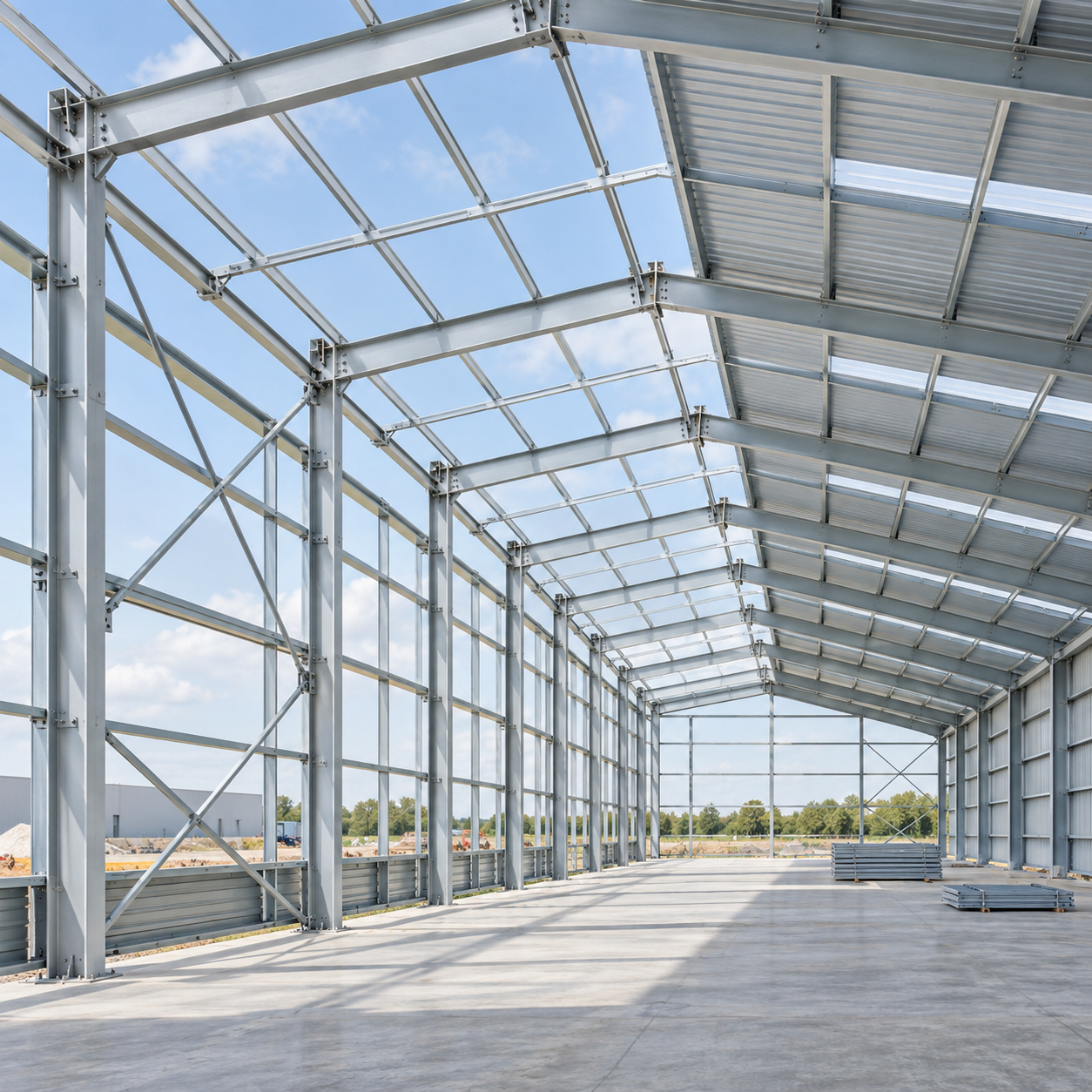
· Lower self-weight can simplify transportation, lifting and foundation design.
· Standardized components support fast factory production and site assembly.
· Efficient use of steel can reduce project cost when loads and spans are moderate.
· Dry construction methods help improve site cleanliness and shorten schedules.
· Lightweight systems are adaptable for warehouses, roofs and low-rise buildings.
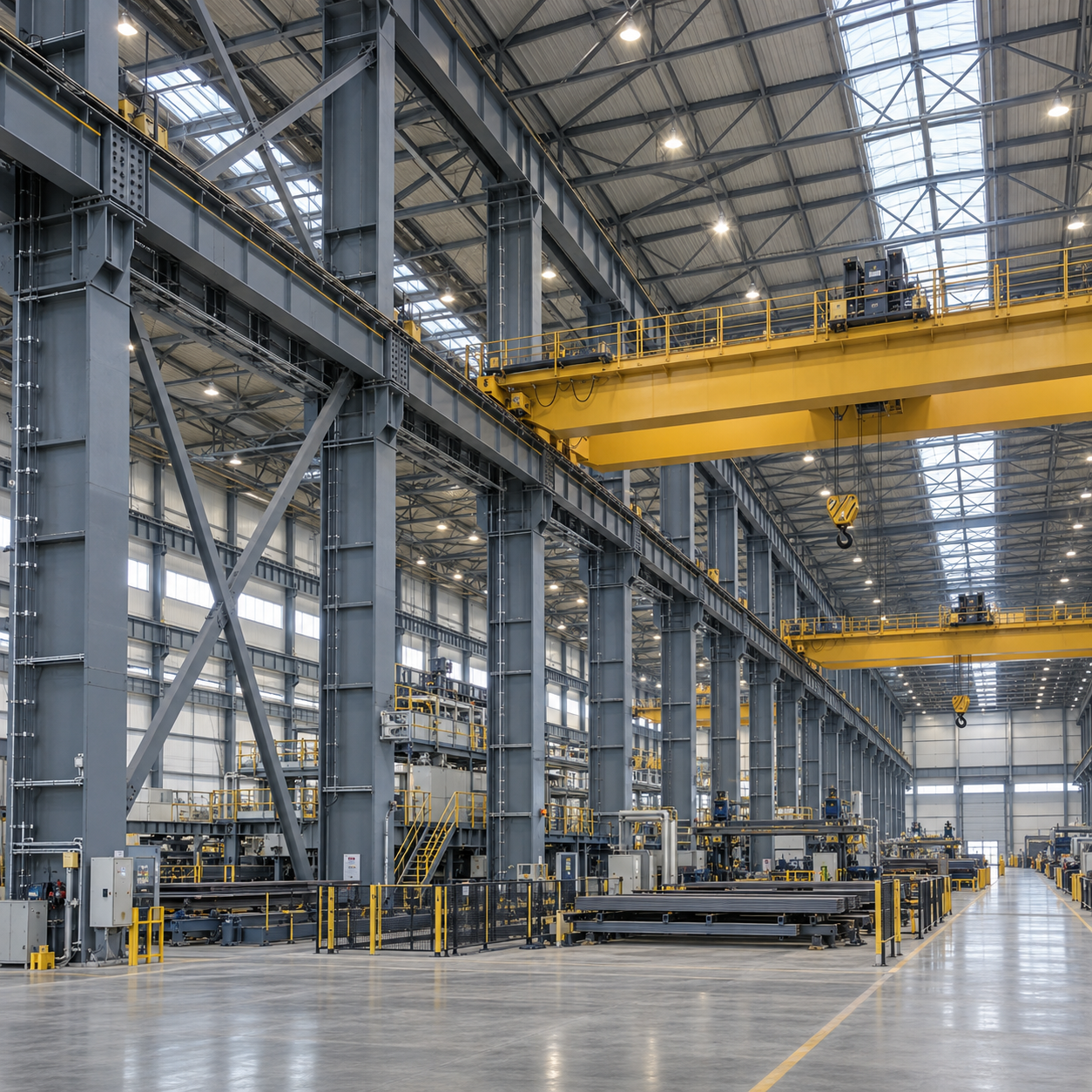
· High load-bearing capacity for cranes, equipment, platforms and concentrated loads.
· Greater suitability for long spans, tall structures and complex structural geometries.
· Robust fabricated members can be customized to project-specific drawings and connection details.
· Strong compatibility with prefabrication, modular delivery and coordinated site erection.
· Durable performance can be achieved through appropriate detailing, inspection and protective coatings.
The correct choice depends on the complete engineering and commercial context. A light steel solution may be preferable when loads are moderate, spans are limited and rapid economical construction is the main objective. A heavy steel solution becomes more appropriate when the building must support high-capacity cranes, heavy machinery, large clear spans, tall elevations, substantial wind or seismic forces, or demanding fatigue conditions.
Before procurement, project teams should confirm the applicable design standard, design loads, service environment, fire and corrosion requirements, connection philosophy, transport envelope, erection equipment and inspection plan. Comparing only the weight or price per tonne may lead to an unsuitable selection; total project performance and lifecycle requirements are more meaningful.
ZSJH provides one-stop structural steel services covering design coordination, customization, fabrication and construction support. Based on approved drawings and project specifications, ZSJH can manufacture structural steel beams, columns, trusses, box sections, frames, platforms, support structures and related connection components for both light and heavy steel projects.
Fabrication can include material preparation, CNC cutting, assembly, welding, dimensional inspection, surface treatment, trial fitting where required, marking and export packaging. Steel grade, section type, plate thickness, dimensions, hole patterns, weld requirements and protective finish can be customized to suit project needs and applicable standards.
If you are evaluating a heavy or light steel structure, send ZSJH your drawings, design loads, material requirements, project location and delivery schedule. Our team can review the fabrication scope and provide a project-specific solution for efficient production, transportation and site installation.


