1 What Must Remain Stable During Measurement
For precision instrument, measurement equipment and sensor manufacturers, the useful question is what the instrument needs at its point of use. Temperature variation, mechanical disturbance, equipment heat and nearby activity may matter differently for each operation.
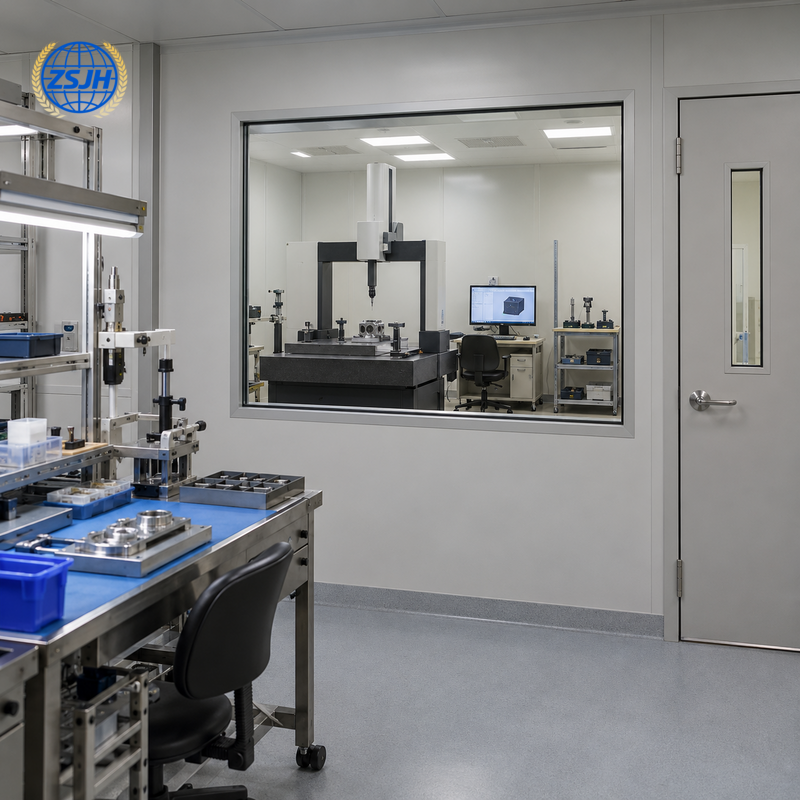
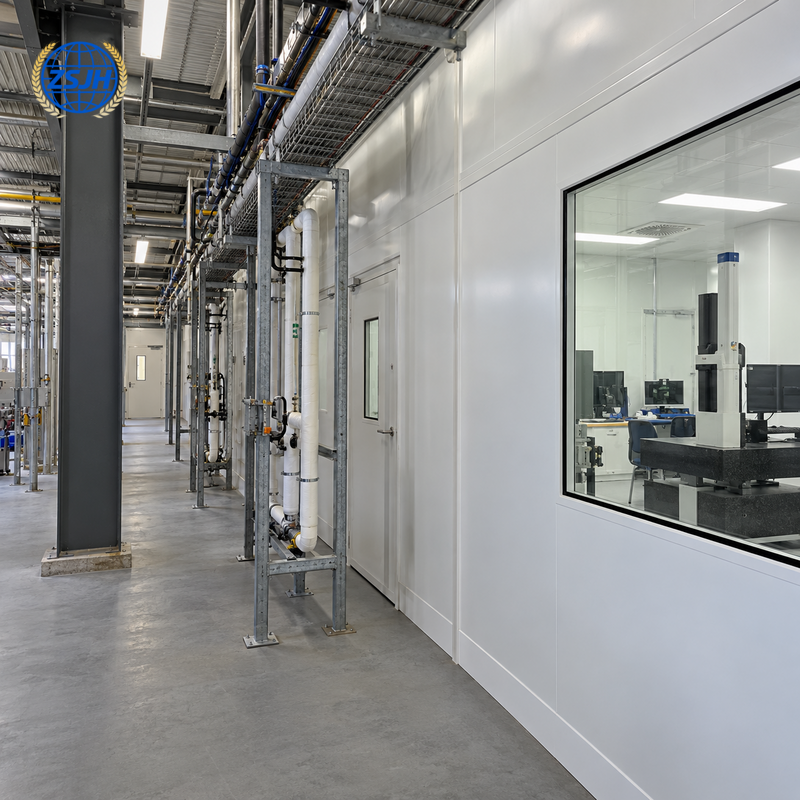
ZSJH coordinates the steel building around the assembly and measurement brief. An independent measurement room can be considered where separation from production traffic or local environmental control is required. It is a planned working environment, not simply a partitioned office inside a factory.
2 Choose the Relationship Between Assembly and Measurement
Adjacent measurement room
Short transfers can suit items that move frequently between assembly and checks. Define the transfer route, handling method and any required stabilization before measurement. The operator and equipment specialist set the measurement procedure.
Separate measurement zone
A more distinct location may be evaluated where nearby machinery, loading traffic or doors could disturb the measurement environment. Review access and service paths alongside structural and environmental conditions.
Several specialized rooms
Different instruments can have different environmental and support needs. A common room is suitable only where those requirements are compatible; otherwise compare dedicated areas against the additional enclosure and services.
3 Ask for Vibration Criteria in a Usable Form
Obtain the instrument vendor's allowable vibration criteria, frequency range, measurement position and operating state. A statement such as low vibration is insufficient for a specialist design or an acceptance test.
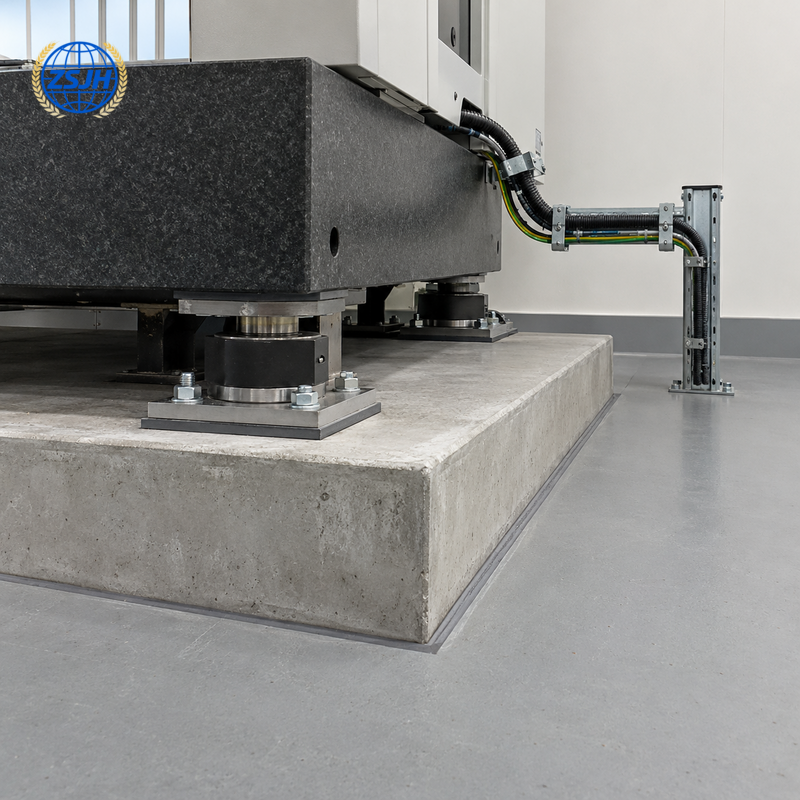
Review the ground, slab, foundations and disturbance sources together. Equipment may need a dedicated foundation or isolation arrangement, but adding an isolation pad without assessment is not a performance guarantee. A stiffer building frame alone cannot establish measurement accuracy.
4 Define Thermal Conditions at the Instrument
Specify permitted variation over the relevant time and space, warm-up or stabilization needs, heat release and the intended occupancy. Locate doors, glazing, supplies and service equipment with the HVAC specialist so their effects on the instrument can be evaluated.
Particle cleanliness, thermal stability and measurement uncertainty are different requirements. Each needs its own brief and responsible specialist. Cleanroom classification alone does not certify instrument calibration or measurement capability.
5 Check the Foundation and Service Interfaces
Required record | Why the buyer needs it |
Equipment loading and anchors | Establish foundation and floor design inputs. |
Delivery and replacement envelope | Check doors, route geometry and floor capacity. |
Support and vibration brief | Allocate specialist analysis, isolation and acceptance duties. |
Environmental schedule | Identify room and local instrument requirements. |
Utility and heat schedule | Coordinate service routes, electrical supply and HVAC duty. |
Site design basis | Confirm structural actions and local review responsibilities. |
Route services without creating unreviewed bridges across any isolation joint. Independent service supports and appropriate connection details can be coordinated where required by the approved design. Keep routine maintenance access distinct from sensitive operating space where practical.
6 Precision Buyer Questions
Can this be installed in an existing factory?
Yes, subject to survey, support capacity, environmental and service assessment.
Does a particle class include calibration?
No. Particle classification and instrument calibration are separate activities.
What should I send first?
Instrument data, measurement requirements, support criteria, site information and the intended assembly-to-measurement route.
7 Share Your Measurement Requirements With ZSJH
Send the instrument data before fixing the building grid. ZSJH can coordinate the structure, rooms and specialist support interfaces.
Button: Contact us for a quote
Email: sales@zsjhsteel.com | WhatsApp: +86 15122582058

 English
 العربية
 Français
 Русский
 Español
 Português
 Deutsch
 italiano
 日本語
 한국어
 Nederlands
 Tiếng Việt
 ไทย
 Polski
 Türkçe
 አማርኛ
 ພາສາລາວ
 ភាសាខ្មែរ
 Bahasa Melayu
 ဗမာစာ
 தமிழ்
 Filipino
 Bahasa Indonesia
 magyar
 Română
 Čeština
 қазақ
 हिन्दी
 فارسی
 Kiswahili
 اردو
 Gaeilge
 Māori
 Hausa
 Igbo
 Kurdî
 Lëtzebuergesch
 ਪੰਜਾਬੀ
 Runasimi
 Yorùbá
 isiZulu


