1 Start With the Tool List
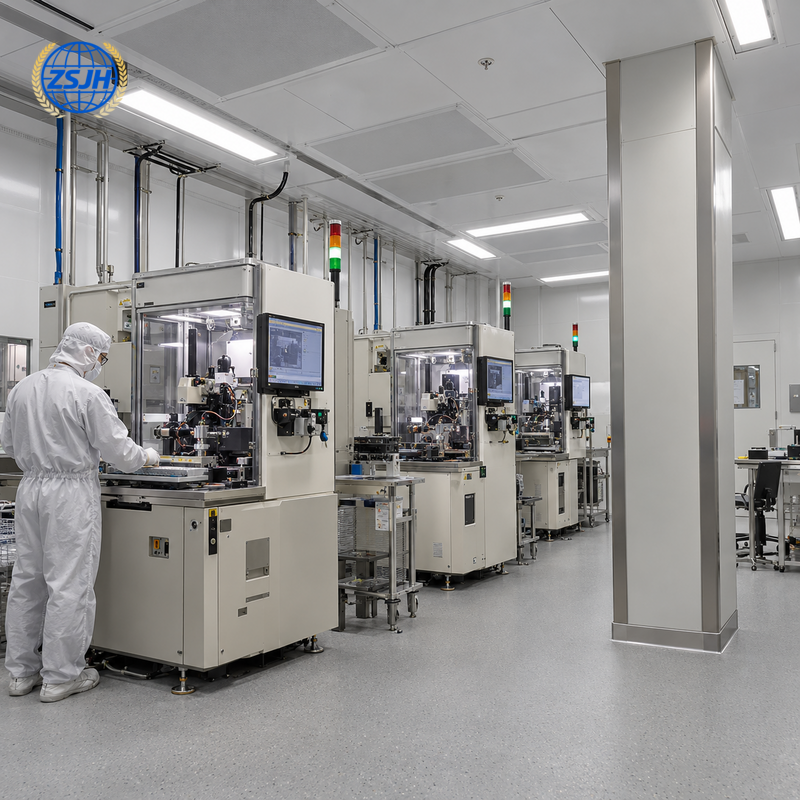
A packaging facility's building brief begins with the tools that must fit, operate and be replaced. Equipment footprints alone are insufficient: connection panels, maintenance doors, loading routes and removal envelopes can determine the column positions and usable height.
ZSJH coordinates the steel building and agreed support components for semiconductor packaging companies and project contractors. The focus is packaging operations rather than an assumed wafer fabrication specification. Each process owner defines the required environment for its actual tools and materials.
2 Prepare an Equipment Interface Schedule
Interface field | What the project team needs |
Tool geometry | Shipping dimensions, operating footprint, maintenance and replacement envelopes. |
Loads | Operating mass, point reactions, anchor positions and relevant dynamic actions. |
Vibration | Vendor criteria with frequency range, measurement location and operating state. |
Heat and utilities | Heat rejection, required utility types and connection positions. |
Environment | Particle, temperature, humidity and other process-specific requirements. |
Service space | Cable, duct, pipe, access and lifting or removal clearances where required. |
Keep the schedule revision controlled. Changes to a tool or its support reactions after steel fabrication can affect connections, foundations and service openings. Confirm the approved equipment baseline before releasing the fabrication drawings.
3 Separate Structure From Precision Support Decisions
A stronger main frame does not by itself demonstrate suitable vibration performance. Sensitive tools may require a ground-supported slab, isolated foundation or another specialist-designed arrangement. The choice follows the tool criteria, site investigation and vibration assessment; it is not decided solely by the building material.
Coordinate nearby traffic, rotating machinery and service equipment as potential vibration sources. If a multi-level arrangement is proposed, review both static deflection and dynamic behavior. Building vibration acceptance is a defined specialist task with agreed measurement conditions.
4 Allocate the Upper Service Zone
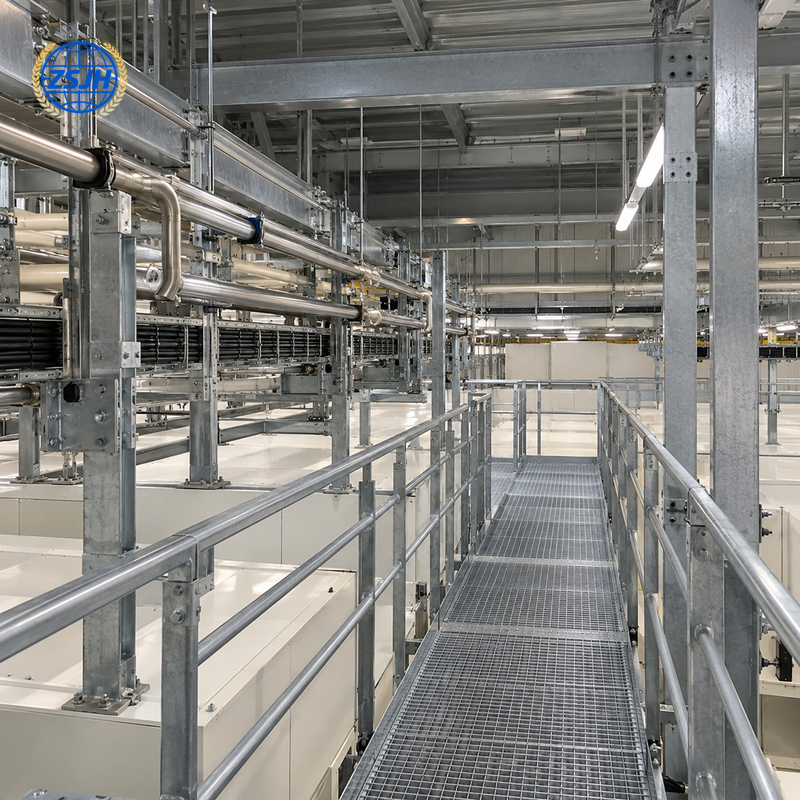
Decide whether services run above the clean ceiling, beside tools in technical corridors, or through another approved arrangement. Reserve installation and maintenance access before increasing production density. Walkable ceilings and service platforms require explicit load ratings and supporting details.
Where utilities are required, their systems and hazardous-service provisions are designed by the respective specialists. The steel package coordinates verified pipe-rack reactions and penetrations; process gas, vacuum, exhaust, controls and safety systems are not automatically included.
5 Plan Move In and Later Replacement
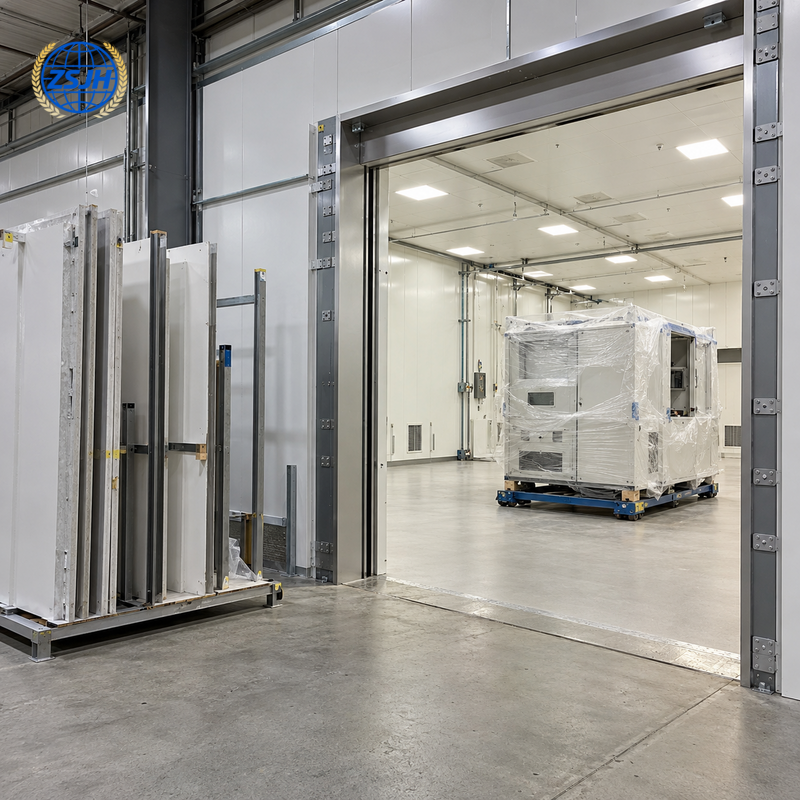
Record the largest shipping envelope, route from unloading to tool position, door sizes, slab capacities and any temporary opening. Align bracing and columns so the approved route remains feasible. Future openings require structural review and enclosure reinstatement details.
For projects in Central America, confirm the exact local design basis, ground conditions, utility availability and importing requirements. Assign local approval responsibilities and specialist installation capability before procurement. Required room performance must be tied to an agreed testing scope and operating state.
6 Purchase Against an Interface Matrix
Request separate prices and responsibilities for steelwork, foundations, enclosure, ceilings, technical platforms, HVAC, utilities, tool hook-up and performance testing. ZSJH supports structural engineering, detailing, fabrication, inspection and export coordination within that matrix. The approved load schedule and interface drawings form the technical order basis.
Payment method and milestones, including any proposed T/T or L/C arrangement, require written acceptance. Coordinate shipment lengths, protective packaging, container loading order and site unloading with the delivery plan. Freight, customs, insurance and inland transport follow the agreed trade term.
After delivery, component records and marked drawings support technical review. Warranty, remedial supply and any site attendance follow the contract. Tool installation, environmental testing and process qualification remain with the named responsible parties unless expressly included.
7 Packaging Project Questions
Is this the same as a wafer fab building?
No universal specification is assumed. The actual packaging tools and processes establish the facility requirements.
Can you promise a vibration criterion from steel tonnage?
No. A specialist assessment must address the tool criteria, foundations, structure and disturbance sources.
Must the clean ceiling carry maintenance staff?
Only if it is designed and rated for that purpose; otherwise provide a separate access arrangement.
Are process utilities supplied with the frame?
Only where their scope and responsible designers are explicitly listed.
What is the fastest way to get a useful quotation?
Send the tool schedule, preliminary layout, site basis and supplier responsibility matrix.
8 Review Your Tool Interfaces With ZSJH
Send the current equipment revision and technical-space concept for a coordinated steel building proposal.
Button: Submit a Packaging Facility Interface Brief
Email: sales@zsjhsteel.com | WhatsApp: +86 15122582058

 English
 العربية
 Français
 Русский
 Español
 Português
 Deutsch
 italiano
 日本語
 한국어
 Nederlands
 Tiếng Việt
 ไทย
 Polski
 Türkçe
 አማርኛ
 ພາສາລາວ
 ភាសាខ្មែរ
 Bahasa Melayu
 ဗမာစာ
 தமிழ்
 Filipino
 Bahasa Indonesia
 magyar
 Română
 Čeština
 қазақ
 हिन्दी
 فارسی
 Kiswahili
 اردو
 Gaeilge
 Māori
 Hausa
 Igbo
 Kurdî
 Lëtzebuergesch
 ਪੰਜਾਬੀ
 Runasimi
 Yorùbá
 isiZulu


