:sales@zsjhsteel.com WhatsApp:+86-15122582058


ZSJH


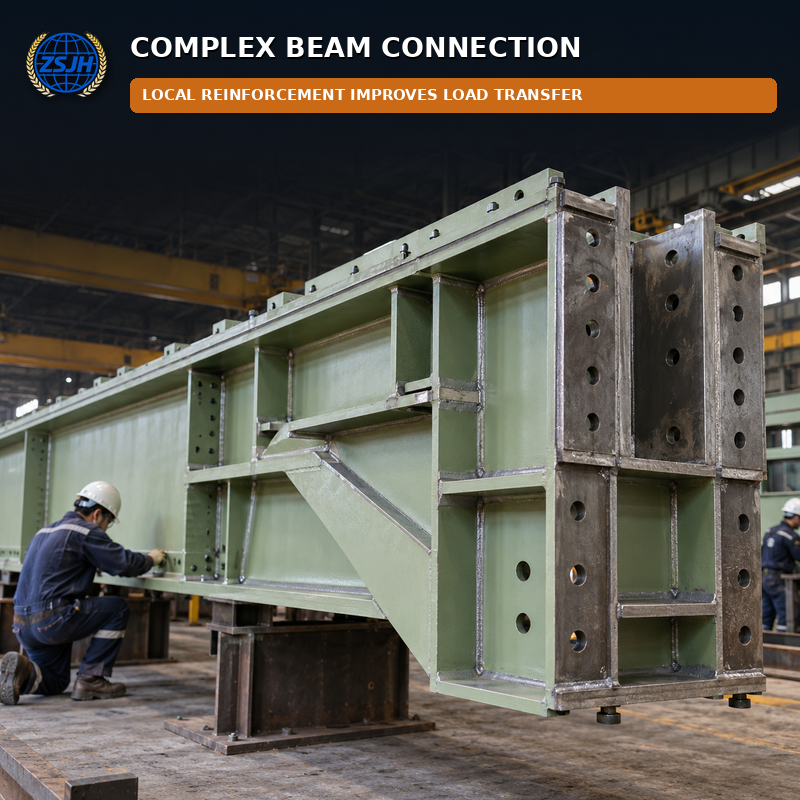
Built-Up Steel Beams combine multiple steel plates, rolled sections or fabricated elements to form a project-specific load-bearing member. Depending on the design, the beam may use unequal flanges, reinforced zones, cover plates, haunches, stiffeners or hybrid section arrangements that cannot be obtained from a single standard profile.
ZSJH Steel fabricates built-up beams for heavy industrial buildings, large-span roofs, transfer structures, equipment supports and complex framing interfaces. Every member is produced to approved drawings, with attention to load-path continuity, weld access, distortion control, dimensional tolerances and connection fit-up. Trial assembly can be arranged for critical interfaces.
Item | Available Options |
Configuration | I/H built-up, reinforced rolled section, hybrid or compound section |
Components | Plates, rolled sections, stiffeners, diaphragms and connection assemblies |
Material | One grade or compatible mixed grades as engineered |
Geometry | Constant, stepped, haunched or locally reinforced |
Welding | Continuous/intermittent welds to approved WPS |
Accuracy | Project drawing and specified fabrication tolerance |
Finish | Blast cleaning, primer, multi-coat paint or specified protection |
Documentation | Certificates, inspection reports and traceability records as required |
• Flexible combination of plates and profiles for non-standard structural demands.
• Local reinforcement can be placed only where bending or shear demand is higher.
• Supports complex end details, transfer zones and equipment interfaces.
• Shop fabrication reduces difficult welding and alignment work on site.
• Controlled weld sequence helps limit camber loss and distortion.
• Compatible with project-specific inspection and documentation plans.
Long-span industrial buildings; transfer beams; heavy equipment supports; power and process plants; large roof systems; platform and mezzanine structures; custom structural frames.
Built-up members can be tailored by section type, plate grade and thickness, flange arrangement, web depth, cover plates, haunches, stiffener layout, openings, connection plates, camber and coating. Our production review also considers lifting points, shipping splits, field splices and site erection sequence.
1. Break down drawings into plates, profiles and assembly stages.
2. Confirm material compatibility, identification and traceability.
3. Cut and prepare components, including bevels and service openings.
4. Assemble using fixtures and controlled datum lines.
5. Weld in planned sequences under qualified procedures.
6. Straighten and machine or drill interfaces where specified.
7. Inspect dimensions, welds, camber and connection fit-up.
8. Apply protective finish, piece marks and transport supports.
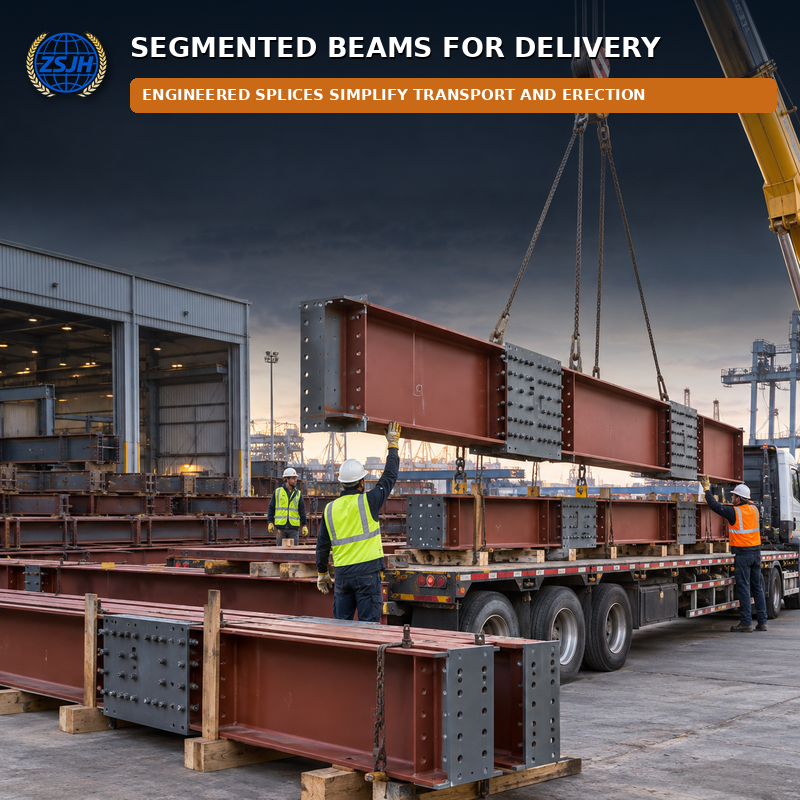
Large members may be delivered as complete shop assemblies or divided at engineered field splices. Supports and lifting marks are arranged to control handling deformation. Packing lists identify main members, loose attachments and fastener packages by erection sequence.
How is a built-up beam different from a welded H-beam?
A welded H-beam is a specific plate-built H-section. A built-up beam is broader and may combine plates, rolled profiles, cover plates, haunches or multiple shapes into one engineered member.
Can built-up beams include shipping splices?
Yes. Bolted or welded field-splice locations can be incorporated when member length or transport limits require segmentation.
Can you perform trial assembly?
Trial fitting can be arranged for complex or critical interfaces when stated in the inspection and test plan.
Share your structural drawings, loading intent and delivery constraints for a tailored built-up beam fabrication proposal.


