:sales@zsjhsteel.com WhatsApp:+86-15122582058






ZSJH


ZSJH Steel produces made-to-order connection assemblies based on structural drawings, fabrication drawings or customer samples. Each component can be customized in material, plate thickness, dimensions, hole configuration, welding method and surface finish.
Our integrated fabrication service covers drawing review, material preparation, precision cutting, drilling, welding, surface protection, inspection, marking and export packaging.
Steel connection parts must fit accurately at the project site. Incorrect hole positions, plate distortion or inconsistent dimensions can delay installation and increase adjustment costs.
Our production team carefully controls the key dimensions of each component, including:
Overall length, width and height
Plate thickness
Hole diameter and spacing
Welding position and weld size
Contact-surface flatness
Connection angle
Component orientation
Surface-coating thickness
Components are manufactured according to approved drawings to support faster alignment and more efficient on-site assembly.
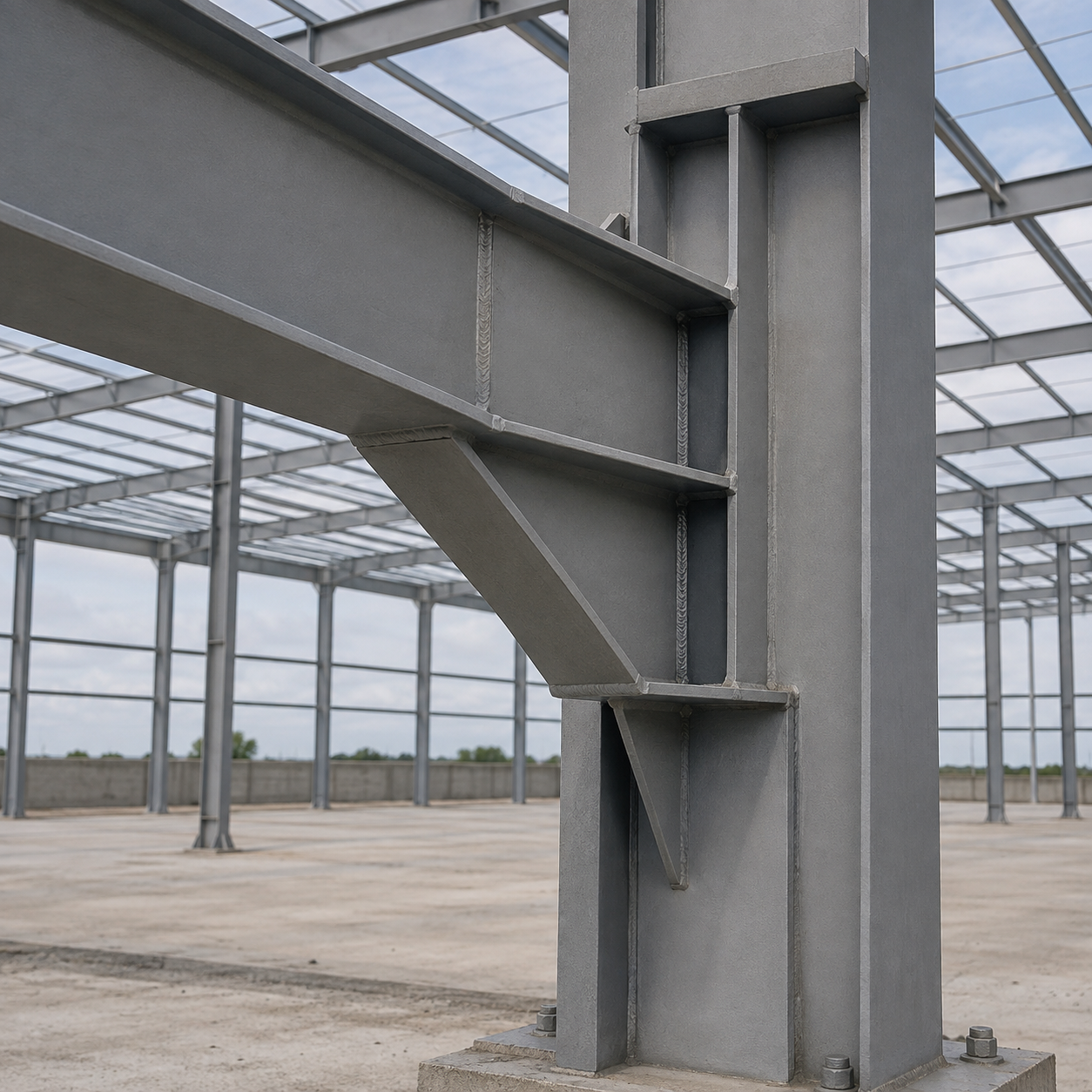
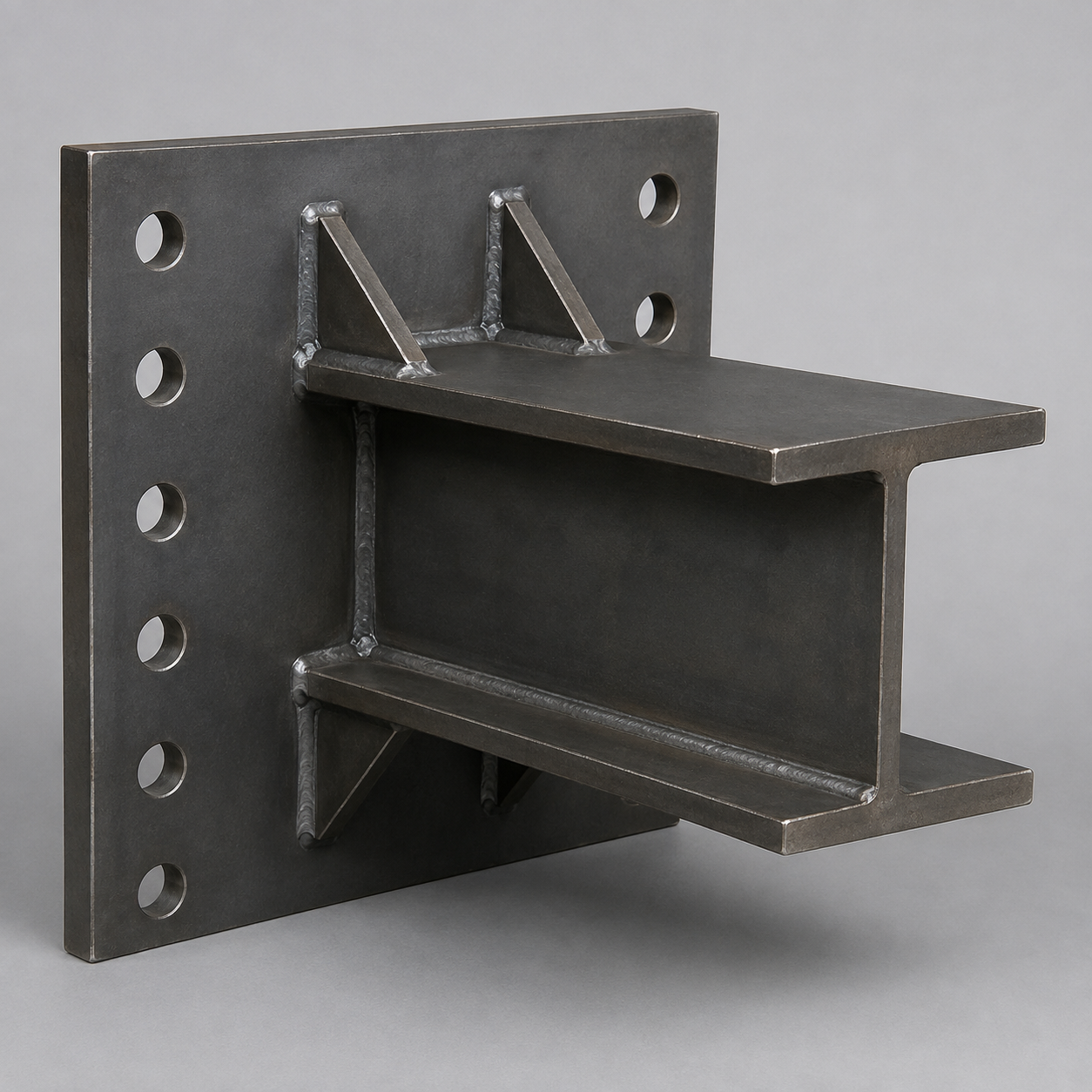
Custom beam end plates, shear plates, splice joints, stiffened brackets and beam-support components for connecting structural beams to columns or other beams.
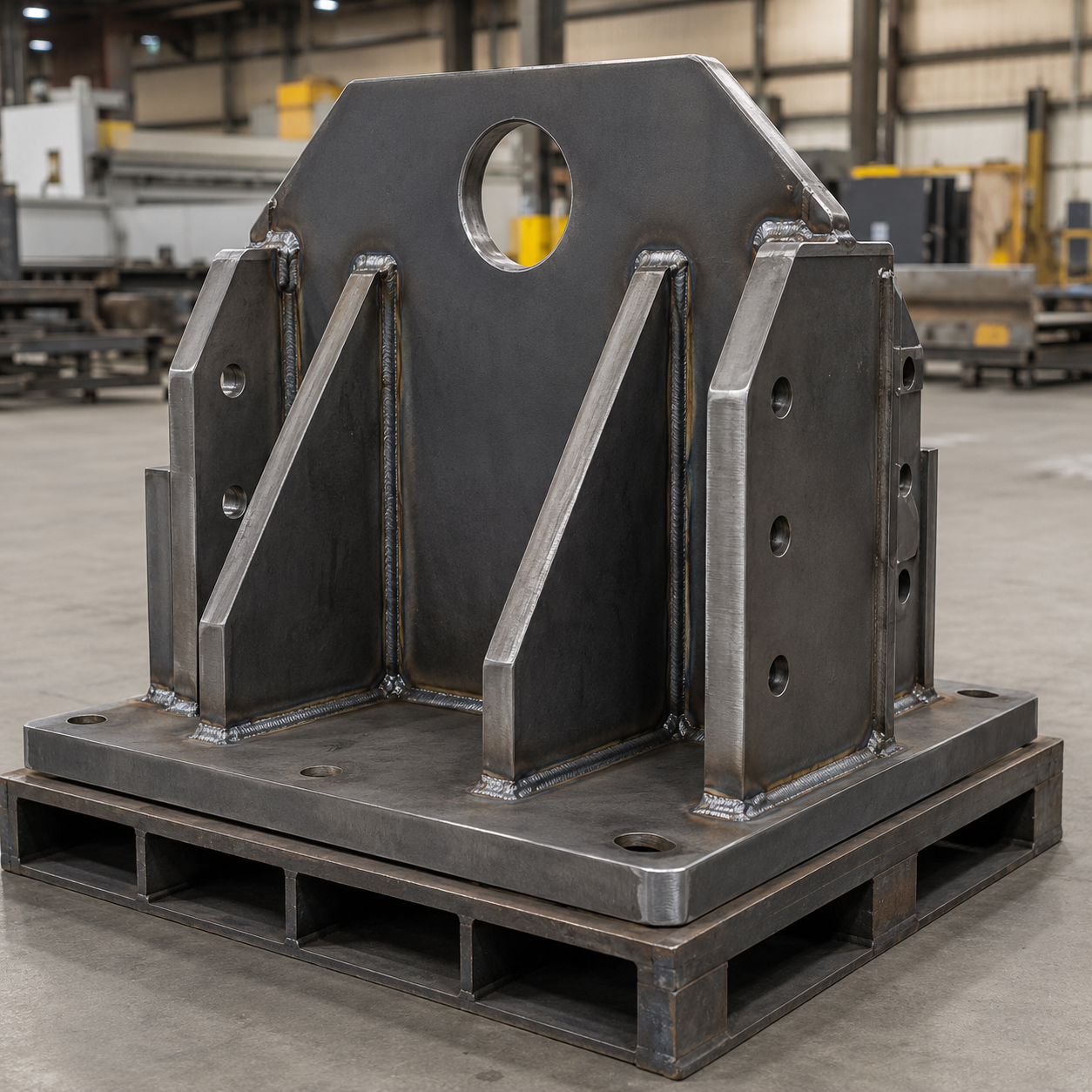
Welded column bases, base plates, stiffened column shoes, column splice plates and customized connection assemblies for transmitting vertical and lateral loads.
Gusset plates, clevis brackets, welded lugs and brace-end assemblies for roof bracing, wall bracing and structural stabilization systems.
Fabricated connection nodes for tubular trusses, roof trusses, space frames and large-span steel structures.
Welded corbels, equipment-support brackets, platform connectors and reinforced steel brackets for industrial applications.
Non-standard connection parts can be produced according to customer drawings, physical samples or specific project requirements.
| Custom Item | Available Options |
|---|---|
| Component Design | Standard connection or fully customized fabrication |
| Steel Material | Carbon steel, structural steel and high-strength steel |
| Material Grades | Q235B, Q355B, S235JR, S275JR, S355JR or project-specified material |
| Plate Configuration | Flat plate, folded plate, built-up section or welded assembly |
| Cutting | Laser, plasma, flame or CNC profile cutting |
| Hole Processing | CNC drilling, punching, slotting or machining |
| Welding | MIG, MAG, CO₂, submerged arc or manual arc welding |
| Edge Preparation | Straight cut, beveling, grinding or machining |
| Surface Protection | Primer, finish paint, powder coating or hot-dip galvanizing |
| Product Identification | Part number, bundle number and project-based marking |
| Documentation | Material certificates and inspection records |
| Packaging | Bundles, steel pallets, crates or customized export packaging |
CNC cutting and drilling help maintain consistent dimensions, clean plate profiles and accurate connection-hole positions.
Connection plates, stiffeners and structural sections are assembled using controlled welding procedures to provide stable load-transfer performance.
Accurately fabricated components reduce the need for on-site cutting, drilling, reworking and dimensional adjustment.
We can manufacture small connection plates, medium-sized welded brackets and large heavy-duty structural assemblies.
Production templates, welding fixtures and inspection procedures help maintain consistency across large quantities of repeated components.
Components can be marked and packaged according to building zones, installation sequences or drawing numbers, helping workers identify parts more efficiently.
The appropriate steel material depends on structural load, installation environment, welding requirements and project specifications.
Available materials include:
General carbon structural steel
Low-alloy structural steel
High-strength structural steel
Galvanized steel
Stainless steel for special environments
Customer-specified steel grades
Material certificates can be supplied for traceability and project documentation.
Customer drawing and requirement review
Material and production-process confirmation
Preparation of cutting and fabrication files
CNC cutting of plates and structural sections
Drilling, punching and edge preparation
Component positioning with fixtures
Welding and distortion control
Grinding and weld cleaning
Dimensional verification
Surface preparation and coating
Final quality inspection
Part marking and export packaging
Connection components are checked throughout the fabrication process to reduce deviations and ensure consistency.
Inspection items may include:
Material grade and plate thickness
Cut profile and edge condition
Component dimensions
Hole quantity, diameter and position
Assembly angle and alignment
Weld length and weld appearance
Plate deformation and flatness
Coating condition and thickness
Product identification
Packaging and loading condition
Magnetic-particle testing, ultrasonic testing or other non-destructive inspection methods can be arranged when required by the project.
Yes. Our technical team can review the component dimensions, material requirements, hole configurations, welding details and surface-treatment specifications before quotation.
Yes. Components can be developed from drawings or physical samples. For complex parts, additional dimensional information may be required before production.
Appropriate welding sequences, positioning fixtures, balanced welding and dimensional correction are used according to the component design.
Yes. Trial assembly or fit-up inspection can be arranged for components requiring accurate interfaces with beams, columns, braces or other structural members.
Yes. Parts can be identified according to drawing numbers, building zones, assembly groups or installation sequences.
Yes. Components can be fabricated first and then hot-dip galvanized. Venting and drainage requirements will be considered during the drawing review.


